

Tired of having to piece together all the writing resources available to hone your writing craft, find like-minded writerly folks, understand the various kinds of editors, learn the ins and outs of courting agents, and how to manage self-publishing, if you choose?
Well, here it is! All in one place. It’s a solid collection that includes links to a wide variety of resources for you as a writer, from building your support community to marketing your finished book. Admittedly, this list barely breaks the surface of all the great writing support out there- but you’ll have quite enough to get started.
Know of any really good resources that I missed? Drop into the comments and let me know.
Ready, set write…
Well, not so fast…
There’s that whole brainstorming and planning phase to consider and the age-old question: to plot or not to plot? But no matter what approach you choose, it’s important to understand what makes a great story…one that holds readers to the end. One that more than just your family will buy.

Craft Books
To that end, here are a variety of craft books to consider for your toolbox:
Plot Perfect, by Paula Munier
Story Genius, by Lisa Cron
Story Engineering, by Larry Brooks
Writing the Breakout Novel, by Donald Maas
Save the Cat! Writes a Novel, Jessica Brody
Writing a Killer Thriller, Jodie Renner
Craft Websites/blogs, and general writing resources:
So many professional writers offer help for other writers. Here are a number of website that you can be sure have a wealth of knowledge.
Jane Friedman– her main website is filled with knowledge and links. I can’t say this enough: anything from Jane Friedman is worth your time.
HelpingWritersBecomeAuthors– a wealth of knowledge from KM Weiland
Story Tellers Road Map (from the authors of the bestselling Thesaurus Guide series)
Writershelpingwriters.net, by Angela Ackerman and Becca Puglisi
Writers in the Storm– an award winning blog covering a wide variety of craft issues, from how to pen spy craft to writing log lines.

Connecting with others:
There are far too many ways to connect with other writers to list them all here. I’ve listed places for you to consider begining your search for like-minded writers as well as a couple of websites that bring writer’s together.
For most groups, it’s best to vet whatever group you consider joining to see if their culture matches with your needs (are they too casual? too harsh with critiques, nice or nasty to questions posted, etc). Also, most groups have a standard ‘no self-promotion’ policy, so don’t join thinking you’re going to sell your book there. Some have specially announced periodic days for such links, but post when you shouldn’t and you may find yourself looking for a new group.
Writing Organizations (state branches of national or state specific orgranizations)
Universities and Community Colleges may hold writing classes or sponsor writing club meetings
Local library- your librarian may know about writing workshops or critique groups near you.
Local bookstore- get to know the people that work at your local bookstore (especially the small local shops). The store may run classes and workshops, will know local groups to connect you with, and will be really good to know on a face-to-face basis when you finally ask them to stock your book or let you have a book signing at the store.
Meet Up! search for local writing groups. You’d be surprised how many there might be.
Writers online: There are millions of blogs, webpages, or newsletter that writers publish. Making connections is great, but you don’t want to inundate yourself (or your inbox). And it’s hard to know who to connect with. Start with a few connections and slowly build to gain comfort and develop rapport.
Social media: Make connections, though X, Instagram, and/or BookTok. Facebook has many writing groups, including general groups, genre-based groups (such as specifically fantasy or horror), and specialty knowledge groups (such as Trauma Fiction, Authors Fire/Rescue, Writers Detective Q&A).
Specialty online websites that focus on topical information, such as Dankoboldt.com (science fiction), NovelMalpractice.com (medical scenarios), Killer Nashville (thriller and crime based), and mine that focuses on perilous scenes using drugs (Grimreaders.com). Search until you find your online companions!
Blog hop with other writers: While you’re online, check out the Insecure Writer’s Support Group that holds a monthly blog hop for writers to get to connect with each other and share tips. Each month, they post a topic for writers to post tips about and they promote relationship building through blog hopping with each other. (Check out this month’s blog hop link at the bottom of this post!)
Conferences– it can’t be said enough-meeting writers (and agents) in person will build a solid foundation for connections in the industry, gives you a chance to run into agents in a social setting without the stresses of pitching, and gives you tons of relevant craft and industry information. But they aren’t cheap! And there are so many to pick from with a wide variety of genres represented. Check your online community or local writer group for recommendations. Vetting the conference topics (and agent represention) is a smart way to start narrowing down a target.
Craft podcasts:
If you’re like me, listening is a great way to understand and visualize the concepts. And in a busy schedule, podcasts can be more time flexible. Each one has a different feel and culture and sound. Check out several and find those that speak to your needs best.
Here are a number of podcasts to get you started that cover everything from specific story structure elements to interviews explaining the process of querying.
Helping Writers Become Authors, with award winning story coach K.M. Weiland. This in depth educational podcast dives deep into story structure and a wide variety of writing techniques, such as writing antagonists that work and developing archetypal character arcs. This podcast does assume you have some working knowledge of the vocabulary of writing, such as plot points versus midpoints and pinch points. But you can easily pick that up along the way.
Simply Write– veteran magazine writer and author Polly Campbell discusses practical writing information from technique to pitches with a variety of authors and specialists in the publishing industry.
Mythcreants– this sci/fi and fantasy focused podcast covers a wide array of writing topics, such as writing dark fantasy, what makes gritty stories, giving your character extra senses, and using unreliable narrators.
Way-Word Writers, hosted by literary agents with Storm Literary Agency, this podcast includes topical interviews with industry insiders and published authors.
The Plot Thickens, hosted by bestselling author Elly Griffiths and focused on crime fiction.
Writing Excuses– a long-standing 15 minute episodal podcast covering writing topics, from subtext and the nuances of dialgue to world building and backstory development.
I Should be Writing, hosted by Mur Lafferty. From navigating imposter syndrome to riding the revision roller coaster, this podcast can help you go from “I should be writing” to “I am writing” with confidence.
Fiction Writing Made Easy– a deep dive into writing, such as developing backstory and writing point of view.
Classes:
There are a number of well-respected places to hone your writing skill, including online, in person workshops, and even writer-themed cruise destination travel. Here are several to consider:
AgentsHelpingAuthors– Literary, subrights, and film agents offering classes on a variety of topics, from querying to marketing.
Jane Friedman– some free, some paid. A wealth of information from and renown industry leader.
Fiction University Janice Hardy offers classes on all aspects of writing, from story concept through publication and marketing.
Writershelpingwriters– workshops and more.
No Stress Writing Academy– numerous classes, some (like Marketing 101) are free. Get insider tips and a forum to connect with other writers.
Writer’sDigestUniversity– workshops and classes on a wide variety of topics, from agent 1-on-1’s to plotting your novel.
WriterUniv.Com– for writers by writers. Classes on everything from story brainstorming to weaving plots lines together to finishing your manuscript.
Lawson’s Writer’s Academy– for all genres and all skill levels.
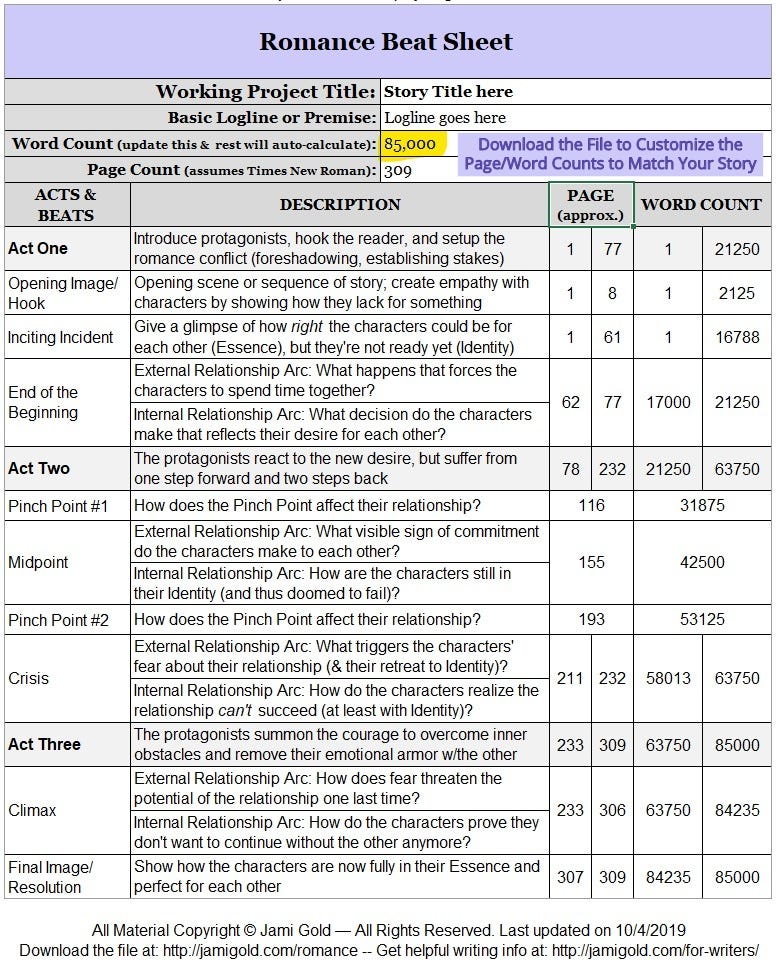
Beat sheets:
Whether you’re a plotter or a pantser, or somewhere in between, your story scenes still need to flow, plot holes should be avoided, and readers will expect a satisfying story progression. Beat sheets help you keep track of these elements. Plotters can use them before writing. Pansters should consider applying them to a finished manuscript to look for potential flaws.
Worksheets for Writers– this fabulous resource by Jami Gold pulls together information from the story experts such as Michael Hauge and Larry Brooks into simple sheets to plan your important story beats. There are sheets for basic story structure, romance, and many more.
Mastering dialogue:
Writing realistic dialogue can be hard. Too often, it feels stilted, overdone, or expository. Here are a few resources to help make writing realistic dialogue easier:
Keep it simple: Keys to realistic dialogue, by K. Trupkiewicz
Getting Dialogue Right, by Ali Luke
Point of View (POV):
POV can be very confusing to new writers (and even some of us seasoned writers!). Here are a few good reasources discussing POV to help you choose how to approach your manuscript.
The Basics of POV for ficiton writers, by Jane Friedman
Editors on Omniscient POV, at CareerAuthors.com
3rd Person (helping writers become authors.com)
Common Writing Mistakes (related to POV, with definitions and examples)
Ready to edit that manuscript?
We would all love to believe we can edit our own manuscripts.
We can’t.
Sure, we can make several passes to clean it up enough before sending it to an editor, but we are generally too close to our own stories to see the flaws. Our brains may argue that a scene needs to stay or that the arc is perfect. But getting that outsider’s point of view (not to mention a grammar check) is incredibly important.
And there are several kinds of editors, including line editors, developemental, and more. Choosing which kind to trust with your investment is important because, yes, editors can be costly. And because many of us have plenty of financial constraints, I’ve also included one solid reference for those of you that are planning to self-edit.
7 Drafts: self-edit like a pro, by Allison K. Williams this book is a must, whether self-editoring or also planning to hire an editor.
3 “easy” steps for cutting words from your manuscript, by Janice Hardy
Editors, trusted and recommended by Jane Freidman (scroll down her webpage)
Getting that book baby into the world:
Now it’s time to consider what you want to do with that story you’ve poured your heart into. From self-publishing to traditional publishing, there are many options and considerations. Here are a few:
Querying and pitching resources:
Comp Title Finder, by Allison Alexander. A searchable database
How to Find the Perfect Comp (what are they, their importance, and how to find them)
Tips for Finding Comps– a concise to the point list of methods and sources
The Four Elements, by Amy Collins (the difference between elevator pitches, queries, log lines, and synopsis)
The Complete Guide to Query Letters, Jane Friedman
Writing a Fantastic Query Email for Fiction and Memoir; AgentsHelpingAuthors.com
The Four Elements, Writers Digest (Difference between elevator pitches,
query pitches, log lines, and synopsis)Insecure Writers Support Group: Lists of publishers, agents, information on
how to query, and conferences and workshops.
Self-publishing resource:
As you can imagine, there is a huge amount to know about self-publishing- far more than I could include here. Instead, I’ll start you with a great resource from a renown professional in teh writing community:
Start Here: How to self-publish your book, by Jane Friedman
Scam Alert!
They’re everywhere in every industry- scam artists ready to pull on your heart strings, take your money, and run. Save yourself heartache and do due diligence before signing with anyone.
Writer Beware- the go to resource for known scams and checking for reputation problems of publishers or agents.
Legal Resources (contracts, and more):
Contracts are hard to read and harder to understand- between terminology, legal-eze, and the complexity of things like rights and royalties. Check out the links below to find truested resources to help get your through the legal process.
AuthorsGuild.org– a major advocacy group for writers, with many resources
Jane Friedman’s Trusted Resources for editing, querying, legal contract information, etc.
Deciphering Literary Contracts, by Margie Lawson
Scratching the Surface!
Well, hopefully you have more than enough to get you started. If it isn’t obvious now, just know you are not alone on your writing journey!
If you found useful links here, consider subscribing to my newsletter, and get a downloadable version of these links on a printable PDF.
Happy Writing!
Insecure Writer’s Blog Hop Links (meet some others writers!):
The post Fiction Writing Resources List first appeared on Miffie Seideman.