


At the Ironman Arizona Triathlon this past November, I stood along the banks of Tempe Town Lake, acting as an extra set of eyes, watching for swimmers in trouble, and sending kayakers off to help.
I know the fear in the mind of those struggling swimmers. All the questions they have, as panic sets in. The sudden realization of the magnitude of what they’re trying to accomplish. The sudden awareness that you could actually drown.
As the kayaker reaches a swimmer, the athlete is allowed to hold onto the boat…as long as it stays still in the water and does’nt help move the swimmmer forward along the race course. With the fear of drowning momentarily abated, a desparate flood of questions invade the athlete’s mind: What if I can’t finish the swim? What if I can’t finish the race? What the hell was I thinking? Panic breathing can take hold.
One of the hardest questions for these struggling athletes to ask (and for me to have to answer) is how far they still need to swim. That’s when I have to point to the far (FAR) off bridge that signals the turn-around (the half-way mark of the swim). This is also when I usually try to encourage them, instead of letting them focus on the “how far” issue. Look how far you’ve come! Give yourself a minute, you’ll be fine! Take it one buoy at a time.
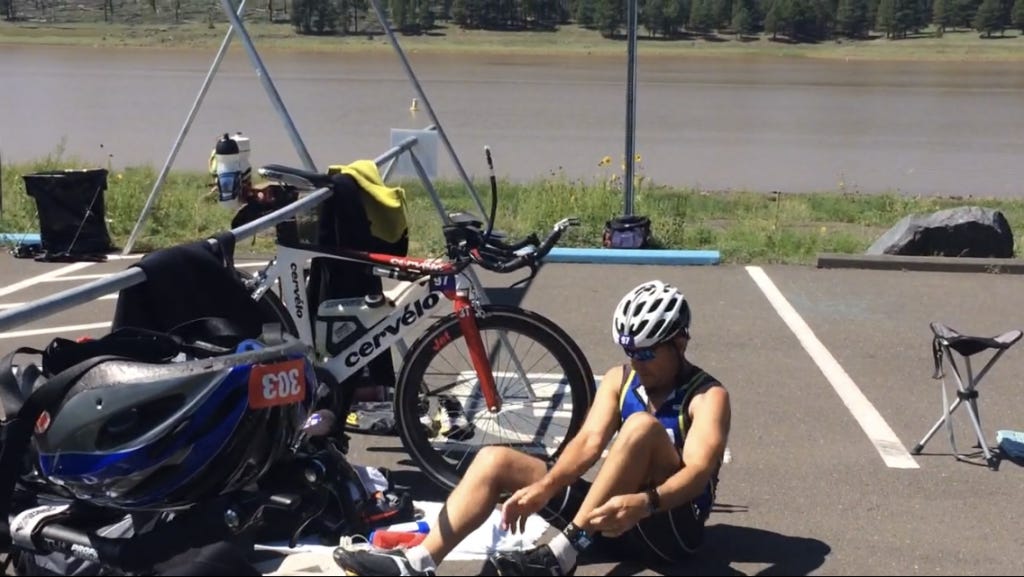
This moment is made even more stressful knowing that after the 2.4 mile swim, there is a grueling 112-mile bike ride followed by a full marathon yet to complete. Struggling in the swim just means the rest of the day is going to be much, much harder.
DNF
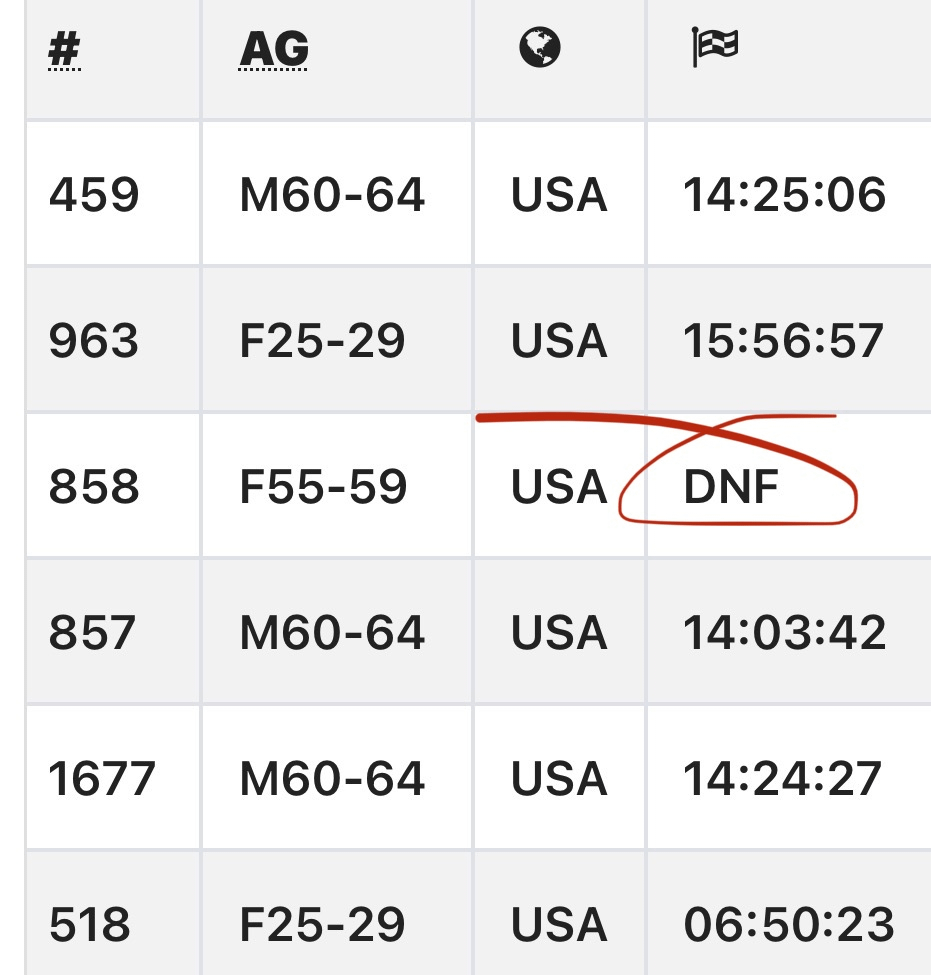
It takes months and months of preparation to get to the starting line of an Ironman triathlon. It’s exhausting training that usually includes exchanging precious family and social time for hours of swimming, running, and cycling. Still, on race day, no matter how hard you’ve trained, the reality is that there are also cut-off times along the course. And if you don’t get past specific points on the course in time, you’re not allowed to finish the race. These cut-off rules are so strict that a race official will flag you down and remove your timing chip. The race records will be immediately updated to officially list you as DNF (‘did not finish’).
Ouch!
Those 3 little letters are crushing. All the work, the hours and months of one’s soul poured into one goal…and all those hopes end in the blink of an eye.
In that blink, with that proverbial rejection that says “you weren’t good enough,” the athlete begins to slide right into the first stages of grief. At this point, the athlete has a few choices: wallow in the pain and despair or be kind to themselves, focusing instead on what they’ve overcome just to get to the starting line. They can turn the “you weren’t good enough” to “I’ll be back.”
How they emotionally choose to deal with this may impact their future in the sport.
Would You Cheer or Boo?
How would you respond to this athlete, as you watch their timing chip get removed? Watch their grief stricken face? The anguish? The tears? What would you say? Would you point out their deficiencies? Point out how good other athletes are still doing? Tell them they wasted the year and should give up on triathlon?
Of course not!
We encourage people in these moments- help them find a silver lining. Talk about what they have accomplished. How proud we are of them. And how they will do even better next time.
Right?
Then why do we treat ourselves so badly as writers when we get rejections of our manuscripts?
But Manuscript Writing is Different!
Is it though? Writers:
Dedicate months/years of pouring our souls into a single manuscript
Give up social and family time to practice our craft
Pick out the perfect list of agents to query
Stress over every.single.word of a query letter
Suffer while writing a synopsis (no one loves these!)
Submit a query…
Then hit the re-fresh button hourly, waiting, hoping for (and even dreading) a response…
…which is too often a rejection. Our DNF.
Those rejections can hit writers the same way that a DNF hits a triathlete. I’ve been in both situations. Believe me…they do feel very similar! The self-doubt, grief, bitterness, fear as the rejections pile up. These all deepen the hurt. And I’m sure we’ve all seen social media posts from disenchanted writers swearing they’ll never write again after too many rejections.
But here ‘s where we have a choice:
to treat ourselves like we would treat the athlete who just DNF’d
or put ourselves down and give up
The 3% Club
Did you know that:
Only ~3% of people ever finish their manuscript
Wait, what?
Yes! By pushing through all those months of dedication and finishing that manuscript, you’ve joined a rather small group of accomplished, dedicated people. The 3% Club!
I know it always feels like everyone in the world has written a manuscript. But that’s not true. There are many, many more that put the pen down long before writing The End.
Be Good to You
So give yourself a little grace. Give yourself a minute to go through the process of absorbing those rejections. Then pick yourself back up and make a new goal: fix problems in the manuscript or send out a new batch of query letters. Maybe give the manuscript a break and come back to it in a few months with fresh eyes. Or consider self-publishing (if you do, make sure to check out Writer Beware for help avoiding scammers and check out my writing resource PDF below!).
No matter what, be proud of your accomplishment! You did all the hard work to get to that query starting line in the first place. You didn’t quit, when many others have.
Congratulations.
Using a Rejection for the Win
When writers tell me that this positive sentiment is probably easy for me to say because I’m already published, I share with them how I had my share of DNF’s along the way. When my contemporary YA manuscript drew the attention of some of my A-list agents, I was so ecstatic. When full manuscript copies were requested, I was elated.
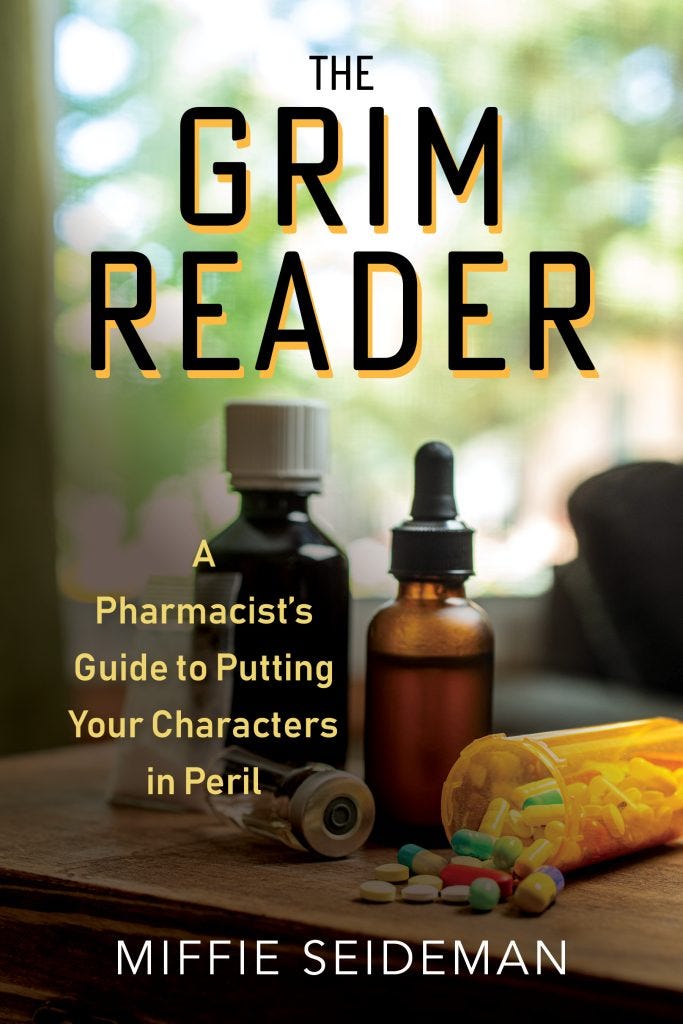
Then the rejections came in. And they hurt. But I decided to dive into the why: what could I learn in writing craft to evolve into a better writer? That manuscript is still waiting for me to edit, but I found my passion in writing The Grim Reader: a Pharmacist’s Guide to Putting Your Characters in Peril. I used everything I studied about the craft, wrote my heart out, and caught the attention of an agent. This January will be the 2nd anniversary of The Grim Reader’s publication through Indiana University Press.
Need some helpful resources for writers?
Here are a few resources to help get you back on track:
7 Steps to Healthy Emotional Endurance for Writers
Write Your Manuscript Like and Endurance Athlete Trains
A PDF with lots of writing resource links: I give this pamphlet out at book fairs and writers have really loved having so many links to resources in one place. Subscribe here and get the pamphlet as a downloadable PDF. It has lists of everything from online writing classes to legal resourses. It’s free. And I promise, I’ll only send periodic email updates...no spammy junk and I don’t sell your contact information to anyone!
Happy Writing!
The post How to Apply a Triathlete Mindset to Manuscript Rejection first appeared on Miffie Seideman.